
Modular Systems
What to Look for in a Packaged Skid Fabricator (Before You Buy)
April 16, 2026 Welcome
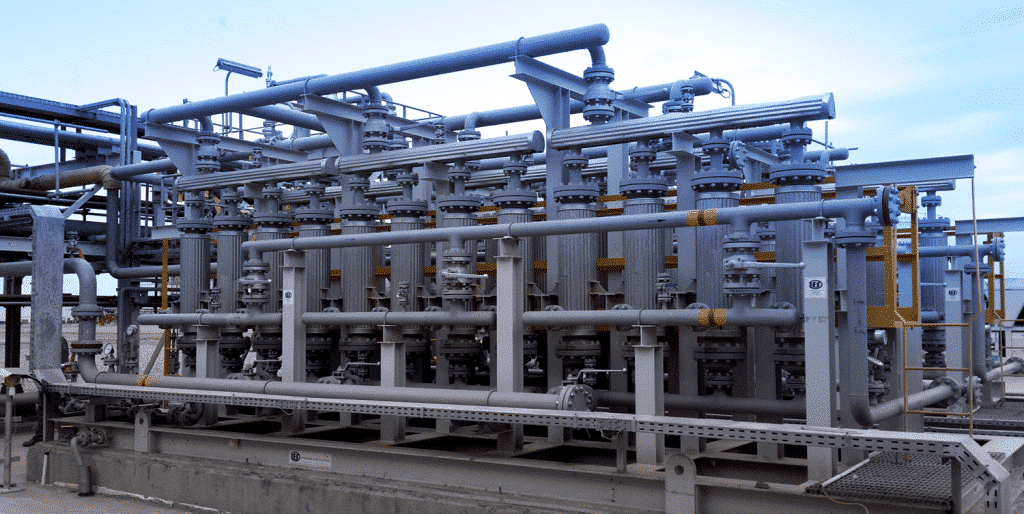
Selecting the right packaged skid fabricator is a decision that directly impacts your project schedule, system reliability, and longterm operating costs. Below are the factors to consider before you choose a packaged skid fabricator.
1. Make Sure They Can Actually Engineer the System
Some shops will build exactly what is on the drawings and stop there. That works only if the design is already correct…in many cases, it is not.
A good packaged skid fabricator has real engineering behind it. That includes process design, equipment sizing, and system layout. Most serious groups will model the system in 3D using tools like AutoCAD or SolidWorks. This helps catch piping clashes, maintenance access issues, and layout problems early. It is much easier to fix these in a model than in steel.
On the process side, simulation tools like Honeywell Unisim are used to check performance before anything is built. This is where flow rates, temperatures, pressure and in some cases separation efficiency get verified. If this step is skipped or rushed, you usually pay for it later during commissioning.
2. Have They Built This Type of System Before?
Fuel gas conditioning, chemical injection, and custody transfer systems all have different design constraints. Materials, controls, and safety requirements can vary quite a bit.
A fabricator that has built your type of system before will move faster and make fewer mistakes. They will also know what tends to go wrong in the field.
Tip: It’s worth asking for examples of similar systems and how they performed after startup.
3. How They Handle Quality and Testing
A reliable packaged skid fabricator must operate under a rigorous Quality Management System. Verification should occur at every stage of production (not just final inspection) to ensure the system meets both process and safety requirements.
What to look for:
- Full Material Traceability: Demand a comprehensive turnover package (TOP) including Mill Test Reports (MTRs) and weld maps. This ensures every component meets your specific metallurgical requirements.
- Certified Testing Procedures: Look for Non-Destructive Examination (NDE) such as hydrostatic testing, radiography (X-ray), and dye penetrant inspection. These can be performed in-house or by qualified third-party providers depending on the shop and project scope.
- Code Compliance & Stamping: Verify the shop holds active certifications for ASME (U and UM stamps) and National Board (R and NB stamps).
- Comprehensive FAT: The fabricator should offer a Factory Acceptance Test that includes a full functional loop check of the PLC/HMI and a mechanical run-test to simulate field flow conditions.
4. How the Skid is Built and Delivered
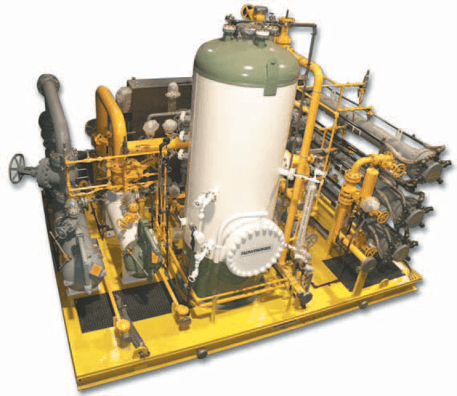
Skid-mounted systems should be designed for efficient installation and operation. Strong fabricators deliver integrated, ready to install packages.
Why does this matter?
- Shorter installation time
- Lower site labor costs
- Fewer startup delays
Systems should arrive pre-piped, pre-wired, and tested prior to delivery.
5. Who Owns the Result?
Projects with multiple vendors tend to run into finger pointing when something does not work.
A packaged skid fabricator that handles engineering, fabrication, and testing takes on full responsibility for the system. (That usually includes both mechanical integrity and process performance.)
There should also be a defined project team. Typically this includes a project manager, a project engineer, and design support. If that structure is not clear, communication can break down quickly.
6. How it Will Run After Startup
Initial cost gets a lot of attention, but operating cost is what stays with you. Material selection, equipment sizing, and control strategy all affect how the system performs over time. Poor decisions here can lead to higher maintenance, more downtime, and lower efficiency. For these reasons and more, it is worth asking how the design supports longterm operation, not only how it meets the spec on paper.
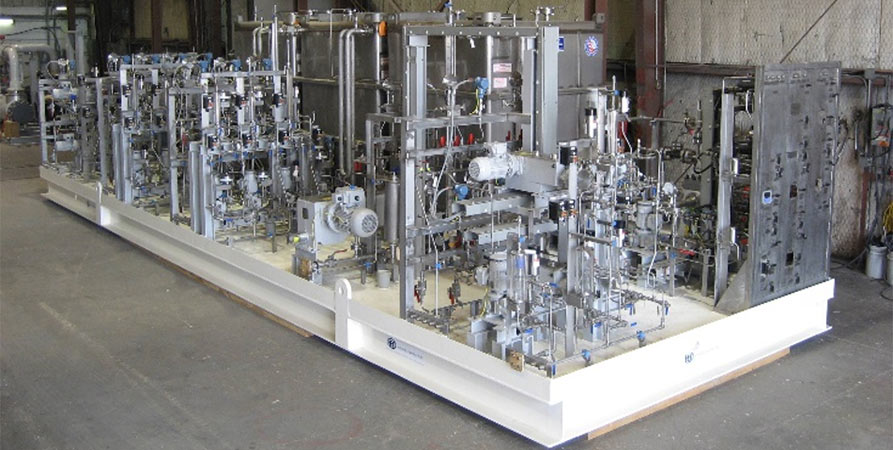
7. How the Project is Managed
Execution is as important as design. A capable packaged skid fabricator will have structured project management and clear communication throughout the project. There should be:
- Defined timelines and milestones
- Regular project updates
- Dedicated project management team
8. What Happens During Installation and Startup?
The job is not finished when the skid leaves the shop! Installation and startup are where everything gets tested under real conditions. Having support during this phase helps catch issues quickly and get the system running as intended. Without that support, small problems can turn into longer delays.
Work with a Packaged Skid Fabricator that Delivers
A packaged skid must perform as a single, integrated unit the moment it reaches your site. Choosing the wrong fabricator often results in field modifications that can very well erase the cost benefits of modular construction.
So if you need a custom engineered process system, the team at DXP/IFS can help. We design and manufacture heavy duty modular systems for the oil and gas, power generation, and air quality industries.
Have a project in mind? Contact DXP/IFS today to discuss your requirements and get a system built for your application.